
Real estate investing has always been about balancing risk with reward. For decades, landlords have relied on traditional single-family rentals (SFRs) or multifamily properties to generate passive income. But in today’s market—where property prices are inflated, interest rates are higher, and margins are tighter—investors are searching for smarter ways to generate consistent cashflow.
One strategy is rapidly gaining traction: Accessory Dwelling Units (ADUs).
At God’s Country Development, we specialize in building ADUs for investors in Grand Junction. Let’s break down how ADUs stack up against traditional rentals when it comes to cashflow, equity growth, and overall return on investment.
Traditional Rentals: The Investor’s Standby
How They Work:
Traditional rentals involve purchasing a single-family home or small multifamily property, then renting it out long-term.
Pros:
-
Proven investment strategy with decades of track record.
-
Easier to finance with conventional mortgage products.
-
Larger tenant pool, especially in suburban areas.
Cons (in today’s market):
-
High acquisition costs. A $375,000 home might only rent for $2,000/month.
-
Slim margins. Mortgage, insurance, taxes, and maintenance often eat into profits.
-
Negative cashflow risk. Rising rates can push monthly costs above rental income.
-
Competition. Institutional investors drive up property prices, reducing affordability.
ADUs: The Modern Investor’s Advantage
How They Work:
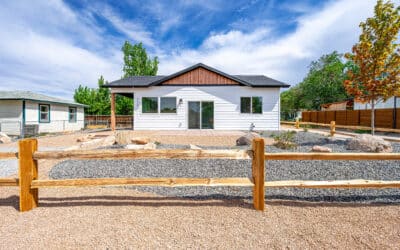
An ADU is a fully independent rental unit built on the same lot as an existing property. Detached backyard cottages, garage conversions, and secondary suites all qualify.
Pros:
-
Lower build cost. Our standard 900 sq. ft. 2–3 bedroom ADU costs around $192,000 turnkey.
-
Higher rent relative to cost. These ADUs rent for $2,000–$2,300/month in Western Colorado.
-
Immediate cashflow. Because you’re leveraging land you already own, the margins are much stronger.
-
Equity upside. ADUs often appraise $30,000–$60,000 above build cost.
-
Tenant demand. ADUs provide modern, affordable housing that appeals to both young professionals, retirees, young couples, and college students.
Cons:
-
Requires upfront construction financing or cash in most cases. Though, depending on your position, you may be able to do it with 0 down.
Head-to-Head: Cashflow Comparison
Traditional Rental Example
-
Purchase Price: $375,000
-
Rent: $2,000/month ($24,000/year)
-
Mortgage (6.5% + taxes/insurance): ~$2,200/month ($26,400/year)
-
Net Cashflow: Negative, before repairs & vacancies.
ADU Example
-
Build Cost: $192,000
-
Rent: $2,150/month average ($25,800/year)
-
No additional land acquisition cost (land is already owned).
-
Gross Cashflow: 12–15% annual return, with payback period of ~7–9 years. Cashflow positive on day one.
👉 Result: ADUs deliver positive, stronger cashflow with a smaller capital outlay compared to purchasing another rental property.
Equity Growth and Exit Strategy
-
Traditional Rentals: Equity grows slowly as tenants pay down your mortgage. Appreciation is tied to the overall housing market.
-
ADUs: Instant equity is created at completion since ADUs appraise higher than build cost. On resale, properties with ADUs sell faster and for more, making them an investor’s secret weapon for long-term wealth.
Who Should Consider ADUs?
ADUs are ideal for:
-
Landlords who already own rental properties and want to increase ROI without buying more land.
-
Investors seeking cashflow and equity in tight housing markets.
-
Retirement planners who want to create passive income streams.
-
Homeowners who may eventually downsize into the ADU and rent out the main home. Also great for multigenerational housing.
The Western Colorado Advantage
In markets like Grand Junction, Fruita, and across Mesa County, the housing shortage is real. Rent demand is high, zoning is becoming more ADU-friendly, and properties with ADUs are commanding top dollar.
God’s Country Development builds turnkey, investor-friendly ADUs designed to cashflow immediately—taking the complexity out of design, permitting, and construction.
Conclusion
So, which offers the better cashflow—ADUs or traditional rentals?
In today’s market, the numbers speak for themselves: ADUs outperform traditional rentals in both cashflow and equity growth, especially when built strategically on land you already own.
If you’re ready to turn underutilized space into a cashflowing asset, God’s Country Development is here to help.
👉 Contact us today to learn how we can design and build your next ADU investment in Western Colorado.

Grand Junction ADU